Excerpt. By Helen De Cruz, professor of philosophy and Danforth Chair in the humanities at Saint Louis University in Missouri & Pauline Lee, associate professor of Chinese thought and cultures at Saint Louis University in Missouri.
In the ancient Daoist masterpiece the Zhuangzi, Zhuangzi suggests that it is good to enjoy yourself. That is, we should not always aim for usefulness. We should not always strive to produce or do things that benefit ourselves or others.
Zhuangzi lived in an extraordinarily vibrant and fertile period in the development of Chinese thought. These few centuries, referred to as the Warring States period, witnessed the growth of thinkers and schools of thought, later named Daoism, Confucianism, Legalism, Sophism, Yangism and, significant to our discussion on usefulness, Mohism.
Zhuangzi argued that we can reclaim our lives, and be happier and more fulfilled, if we become more useless. In this, he went against many influential thinkers of his time, such as the Mohists. These followers of Master Mo (c470-391 BCE) prized efficiency and welfare above all. They insisted on cutting away all useless parts of life art, luxury, ritual, culture, leisure, even the expression of emotions and instead focused on ensuring that people across the social classes receive essential material resources.
Although the Mohists wrote more than 2,000 years ago, their ideas sound familiar to modern ears. We frequently hear how we should avoid supposedly useless things, such as pursuing the arts, or a humanities education. Or its often said that we should allow for these things only insofar as they benefit the economy or human welfare. You might have felt this discomfort in your own life: the pressure from the meritocracy to serve some purpose, have some benefit, maximise some utility that everything you do should be, in some sense, useful.
However, Zhuangzi offers an essential antidote to this pernicious means-ends way of thinking. He demonstrates that you can improve your life if you let go of the anxiety of wanting to serve a purpose. To be sure, Zhuangzi doesnt altogether spurn usefulness. Rather, he argues that usefulness itself should not be lifes bottom line.
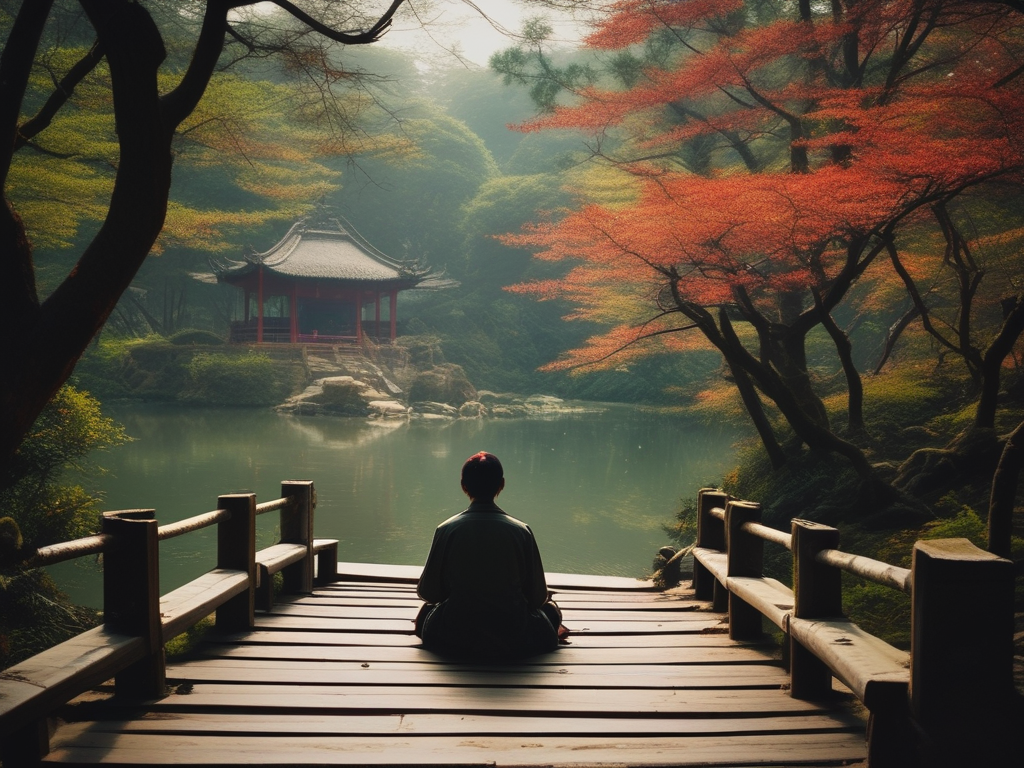
He argues that we should reject casting ourselves and our doings in terms of how much we contribute in the first place. Framed in terms of today, we should not reduce ourselves to tools that serve others, or the economy, the greater good, or even our future selves (for example, the urge for young workers to work very hard to secure their future career). Rather, as Zhuangzi put it, drifting, easy wandering, not caring about praise or condemnation this is true freedom.
Zhuangzi places the notions of freedom and play in opposition to usefulness. According to Zhuangzi, we dont really need to strive to strike a balance between usefulness and uselessness. We need to reject the idea of use altogether. Societies based on usefulness do not make us happier or more in harmony with nature.
Key points How to be useless
- We dont always need to be useful; its good to simply enjoy yourself. In our society, as in Zhuangzis, usefulness is often presented as the measuring rod, the bottom line against which we should gauge all policies and life decisions. Zhuangzi shows that this mindset traps us in a calculus in which we end up seeing ourselves and people around us as a means to an end. This prevents us from enjoying our own lives, and the things around us, on their own terms.
- Celebrate gnarly trees and disabled bodies. Zhuangzi takes certain disabled people as exemplars of the good life: their lives are good precisely because their lives (like ours) are not mere means to other peoples ends (eg, as work forces or in the military). What matters for a good life is not being useful but living out your years in a free and easy way.
- Being useful to others isnt always good for us. In the Zhuangzi, we can find at least two main problems with framing decisions and policies in terms of usefulness: (1) being useful is not always to our own benefit sometimes, we are being used as a means to someone elses end, and we end up miserable as a result; and (2) the lenses themselves of usefulness and uselessness can obscure our view of the good life.
- A useless life is free and easy wandering. By letting go of our concern over whether we (or things in our lives) are useful, we can become happier by being more in line with nature, we can celebrate the wondrous diversity and difference of people and of things as good in their own right, without thinking of some bottom line. You are not a mere tool, but a glorious part of a wild and diverse Universe.
Zhuangzi also recommends flexibility in our life choices. We should drift and wander, not seeking praise or denunciation, shifting with the times. If life-changing events cause you to re-evaluate your life, then you should not dismiss that as a crisis, but rather as an opportunity to reassess what you want.
Most of all, you should not think of yourself as some sort of tool or object and reduce yourself to your usefulness. You are so much more than that. You are not a mere tool in the building of a larger project, or a vessel in a grand ritual; you are a glorious part of the greater Universe, and when you plug in, or hook into, or become one with this ceaseless energy when you become one with the Dao you become your true self.