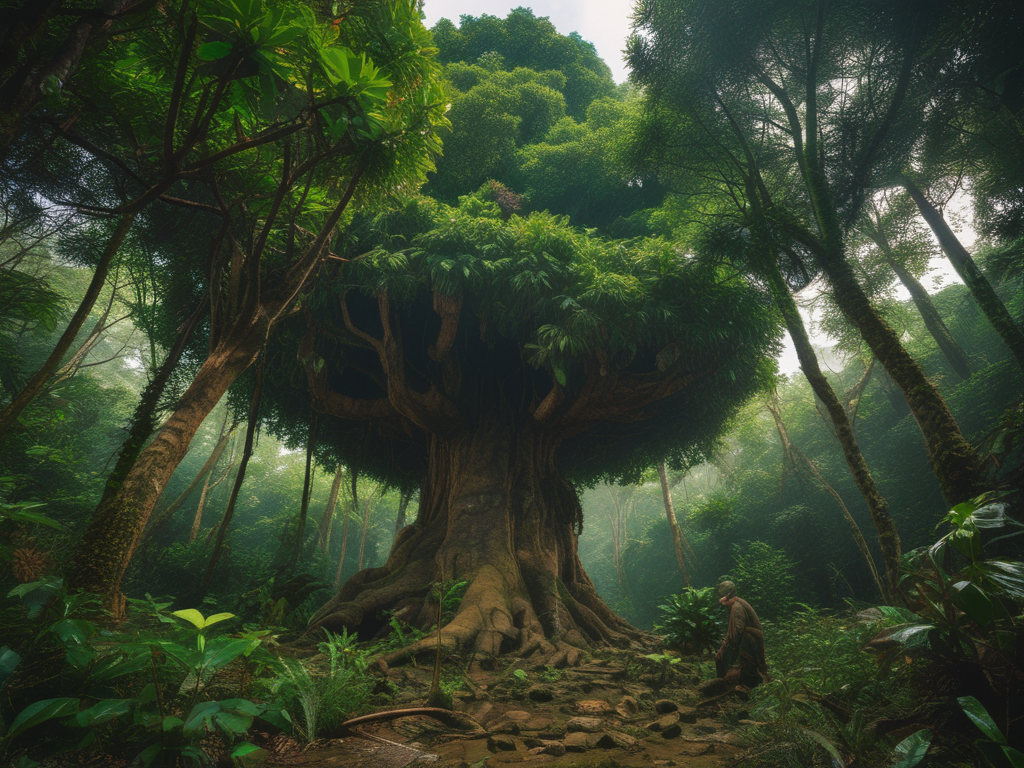
The Amazon rainforest is one of the most diverse ecosystems on Earth. Scientists have cataloged approximately 16,000 different tree species in the Amazon. But despite this remarkable level of diversity, researchers have discovered that there are approximately 227 hyperdominant tree species that make up nearly half of the rainforest. Just 1.4 percent of tree species account for 50 percent of the trees in the Amazon.
But why?
Imagine two plants growing side by side. Each day they will compete for sunlight and soil. If one plant can grow just a little bit faster than the other, then it can stretch taller, catch more sunlight, and soak up more rain. The next day, this additional energy allows the plant to grow even more. This pattern continues until the stronger plant crowds the other out and takes the lion?s share of sunlight, soil, and nutrients.
From this advantageous position, the winning plant has a better ability to spread seeds and reproduce, which gives the species an even bigger footprint in the next generation. This process gets repeated again and again until the plants that are slightly better than the competition dominate the entire forest.
Scientists refer to this effect as ‘accumulative advantage.’ What begins as a small advantage gets bigger over time. One plant only needs a slight edge in the beginning to crowd out the competition and take over the entire forest.